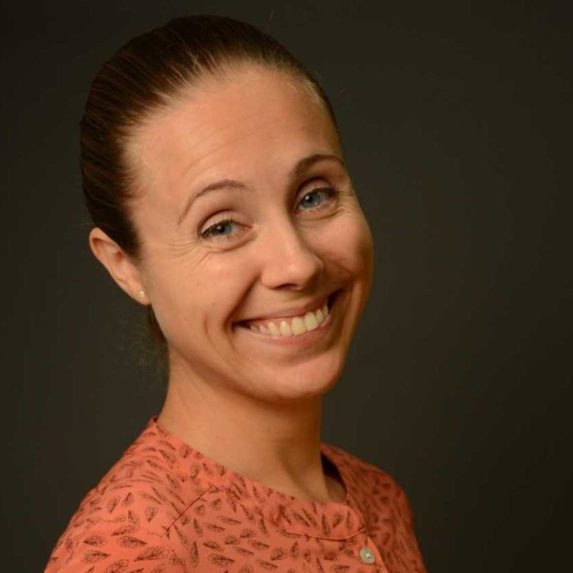
Anastasia Shesterinina
This is a summary of a chapter published in The Routledge Handbook of Field Research; the original publication can be read here.
This chapter considers unique challenges of field research in settings where armed conflict has taken place and/or is ongoing. It opens with a vignette from a personal gendered field experience that highlights the limits of trust with some research participants and trade-offs involved in navigating the risks to the researcher’s safety. Building on this experience, the chapter draws implications for researcher training on the kinds of practical concerns that researchers should consider in preparation for fieldwork, unanticipated dilemmas that can emerge during fieldwork and require decision-making in situ, and possible consequences of fieldwork in armed conflict settings, including vicarious trauma.
“Why did I get into that car?” A vignette from personal experience
After weeks of building my network of contacts and following up on referrals in Abkhazia, a breakaway territory of Georgia in the South Caucasus, I finally arranged an interview with a former fighter from a category of participants that was difficult to access but was crucial for my doctoral dissertation on pre- to post-war mobilisation of ordinary people. This category included Abkhaz men who fought in the Georgian-Abkhaz war of 1992–1993 and continued participating in Abkhazia’s de facto border defence long into the post-war period. His father who was an activist in the Abkhaz national movement before the war and joined the Abkhaz war effort introduced me to this potential interviewee. I set a time during the day in a café, a public space where I conducted some interviews for personal safety reasons. But when the man arrived, he asked me to relocate and said he could drive me to a place that was quieter and more conducive to an interview. In a split second, I had to make a decision—whether to insist on the preselected location or get into his car. I hesitated but got into the car not asking where we were going. As the man drove toward the mountains, where finding an interview place would be unlikely, it hit me that he had hidden intentions. The terror of what could have happened next quickly morphed into determination to convince him to return me to the town. I used every argument at my disposal—that “everybody knew me” given the reputation as a researcher that I established across Abkhazia, the danger of harming an international visitor, and local norms of honour. Whether this continuous flow of thoughts that entered my mind and that I articulated firmly as we drove up was what persuaded the man to bring me back cannot be known. But what is clear is that I made an instantaneous choice in a highly risky situation that I did not anticipate and had no prior training to help me grapple with. The question that I have been left with ever since is, “Why did I get into that car?”
Limits of Trust
While common advice for researchers of armed conflict is to develop trust with interlocutors (Thomson et al., 2013), my field experience demonstrates the limits of trust, particularly with certain participants in the conflict. “[A] complex, contingent, and evolving relationship,” trust was central to my ability to gain an understanding of the security situation in advance of my core field trip, make informed decisions during that trip, and access research participants with a variety of conflict experiences (Parkinson and Wood, 2015: 23). Trust enabled me to engage in open and vulnerable conversations that moved past the dominant narrative of conflict with many interviewees who participated in the war (Shesterinina, 2019: 197). But it was not possible with other interlocutors as our “working relationships” were shaped by our irreconcilable “interests, values, backgrounds, and beliefs” (Fujii, 2017: 3). These emotional dynamics are crucial to understanding my decision-making in the opening vignette. I approached this encounter with the trust that the familial referral by this potential interviewee’s father entailed in the context where I worked to build positive relationships with individuals and broader communities in my field sites. Yet these expectations around trust did not reflect “multiple and fluid positionalities” of my research participants who could at once protect and compromise my safety and change their relationship to me over time (Schulz, 2020: 552). In this instance, trust, typically viewed as a “positive” emotion, was associated with emotional and possible physical harm to me as a researcher (Pearlman, 2023: 1244).
Trade-offs
The complexities of trust are only a part of the story. I was acutely aware of the possible changes in the security situation in my field sites or the border area and the need to leave as a result, which distinguished me from my interlocutors—I had “the privilege of being able to leave” (Parkinson and Wood, 2015: 24). This created a feeling of every interview, especially with difficult-to-reach participants, being essential for future analysis, and potentially the last. This trade-off between my safety and research goals was not clear at the time of decision-making: I did not engage in cost-benefit calculation in the moment I had to choose whether to get into the car or not. But it became evident on reflection, considering the back-up plans that I devised in each field site to depart when needed and ultimately my early termination of fieldwork. Other trade-offs were reputational. Finally, rejecting that potential interviewee could have an unintended consequence of provoking anger that could increase risk. In other words, uncertainty over repercussions surrounded my decision whether I chose to get into that car or not. More could be at stake in this decision than visible at first glance.
Implications for researcher training
This reflection illustrates not only the need to prepare for the challenges that can arise during fieldwork in armed conflict settings but also that not all situations can be anticipated and that some decisions made in situ and research in these settings in general, especially on difficult subjects of violence and war, can have long-term consequences, including vicarious trauma. Attention to these challenges should continue with such tools as “reflexive advising” whereby “mentors and mentees actively and collectively evaluate a combination of researcher positionality and contextual factors in order to open discussions of field safety,” professional support, and peer networks (Parkinson and Zyed, 2022: 40). Such “collaborative ways of taking care of ourselves” can move self-care beyond individualised practices that fail to address structural constraints (Schulzet al., 2023: 1463).