
Coline Cardeño, Elisabeth Olivius, and Malin Åkebo
@kadenokori, @EOlivius , @m_akebo
“Our findings show that WPS activities aiming to support women’s participation in peacebuilding exist in parallel with but often fail to fully recognise women’s existing forms of mobilisation in non-state armed groups.”
This is a summary of a journal article published in the Journal of Civil Wars. The original publication can be read here.
This blog contributes to our understanding of civil war as a social process by exploring how international peacebuilding norms such as the Women, Peace and Security (WPS) agenda interact with existing wartime institutions in post-conflict Bangsamoro. The analysis highlights that activities aiming to support women’s participation in peacebuilding often exist in parallel with, but fail to fully recognise, women’s existing forms of mobilisation within Non-State Armed Groups (NSAGs). This gap is bridged by civil society brokers who are associated with armed groups but speak the language of international peacebuilding frameworks. The findings point to the important role of such intermediaries in translating international norms, and to rebel groups and institutions as arenas for women’s political mobilisation and empowerment.
Wartime and Rebel Institutions Before, During, and After the Conflict
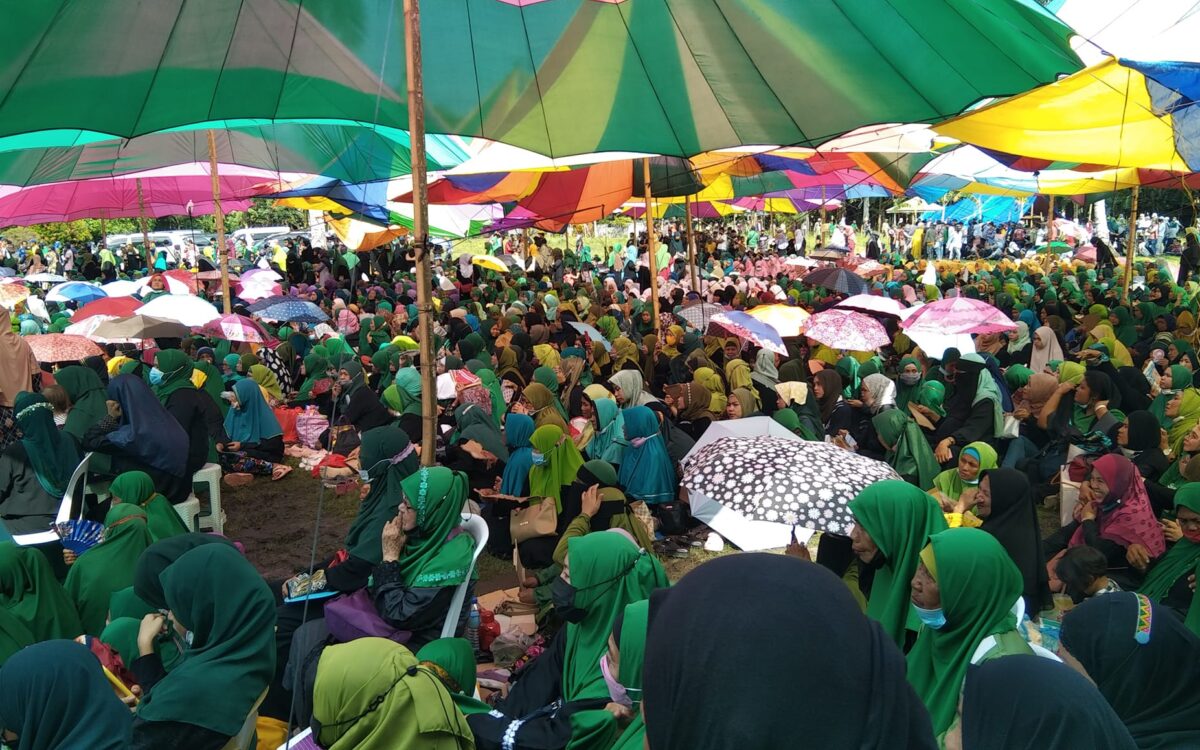
Conflict in the Bangsamoro region of Mindanao in the Philippines can be traced to a history of colonisation and discrimination of the Muslim population in Mindanao, and a struggle for self-determination of their homeland, with the Moro National Liberation Front (MNLF) and the Moro Islamic Liberation Front (MILF) as the largest organised groups in the armed struggle. Two peace agreements have been signed in 1996, between the government and the MNLF, and 2014, with the MILF, that established the current Bangsamoro Autonomous Region in Muslim Mindanao (BARMM). The legacy of civil war means that the organisational structures and decision-making processes of armed groups— rebel institutions —continue to be central to post-war governance. This dynamic can be observed in how individuals often hold multiple positions, in rebel structures as well as in regional and local government units prior to the establishment of the BARMM, and most recently in the Bangsamoro Transition Authority (BTA) formal structures. Within territories under its control, the MILF has installed governance mechanisms for conflict management, third party mediation, peacebuilding, disaster response, etc. Within MILF, there are two women-only units: a civilian women’s group known as the Social Welfare Committee (SWC), responsible for service delivery, charity and advocacy works, recruitment, liaison, propaganda and ideological influencing; and a military unit known as the Bangsamoro Islamic Women’s Auxiliary Brigade (BIWAB), serving as couriers, spies, support staff, and medics for the Bangsamoro Islamic Armed Forces. The MNLF also has Women’s Committee and Women’s Auxiliary Forces. These various women’s units within armed groups have been key channels for women’s mobilisation and participation during decades of war, and remain, to different degrees, important avenues for women’s participation and leadership in post-war peacebuilding. However, the end of war has left most women members feeling abandoned as they received little support either from rebel or formal government structures, and while the ongoing decommissioning process does include BIWAB, only a low number of members have benefitted from it.
How Rebel Institutions Relate to the Women, Peace and Security Agenda
Based on interviews with representatives of women’s groups associated with the MILF and MNLF, other representatives of these NSAGs, international organisations, and local civil society, our findings show that WPS activities aiming to support women’s participation in peacebuilding exist in parallel with but often fail to fully recognise women’s existing forms of mobilisation within NSAGs. The narratives of our interlocutors show that for women in armed groups, their participation in the struggle — their jihad — is a source of pride but also sacrifice and suffering. While religious norms and practices and patriarchal rebel structures often circumscribe the ways in which women participate, their role is described as critical to the struggle and to community welfare and post-war reconstruction. Despite this, international peacebuilding working in post-conflict Bangsamoro generally do not engage directly with women’s groups in the NSAGs, and frequently convey images of Bangsamoro women as excluded, silenced, and isolated, and therefore in need of interventions that can transform them into active participants. In addition, gatekeeping within male-dominated rebel institutions reinforces the situation where international organisation’s efforts to promote women’s participation work in parallel to rather than hand-in-hand with already existing forms of women’s mobilisation within the NSAGs.
Brokering the WPS into rebel and post-conflict governance structures
This gap between international WPS activities and women’s engagement within rebel institutions, is, to an extent, bridged by civil society brokers who are able to translate international norms, project plans, and donor requirements to make them palatable to local communities as well as male commanders, but also to express local agendas and needs in terms that can be understood, and funded by international actors. Some of these brokers are civil society organisations which are formally independent of NSAGs, but are key allies to them. They can also be affiliated with NSAGs through personal relations such as kinship and friendship, as well as through long-term collaboration. Although an exception but not the rule, a notable example of such brokerage is a cash-for-work project implemented by UnYPhil-Women where ex-combatants from BIWAB are trained to become para-social workers, responsible for awareness-raising and the monitoring and evaluation of gender-based violence in their communities. Here, the WPS agenda is successfully translated into programming which resonates with local needs, and builds on, rather than sidelines, women’s existing mobilisation and contributions within rebel institutions. This supports ongoing processes of incremental change regarding women’s roles and rights within rebel institutions, and within Bangsamoro communities.